
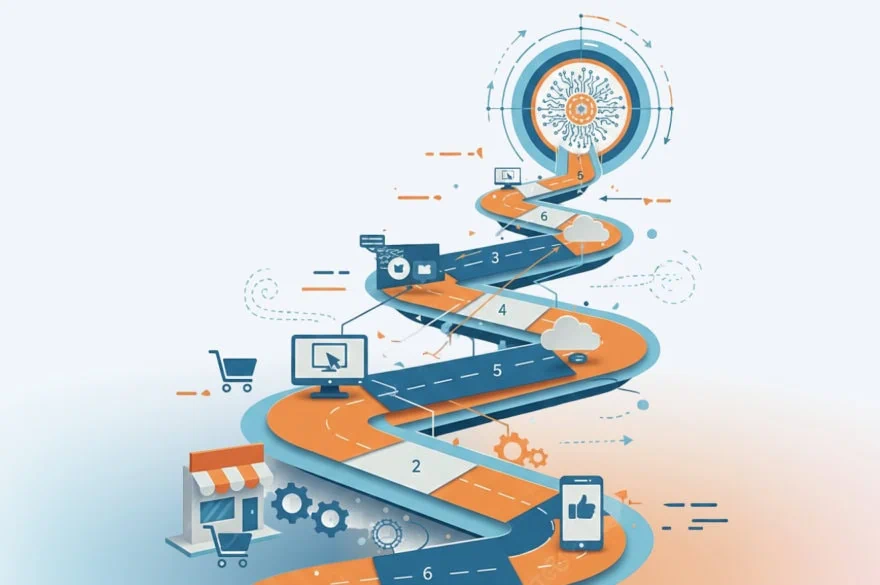

A customer who checks your hours on Google, asks about a product on Instagram, and walks in after work does not think in “channels.” She thinks in moments. That is why omnichannel retail strategy matters for a small shop on Main Street as much as it does for a national chain. The goal is not to act bigger than you are. The goal is to make the store, website, messages, inventory, and staff feel like one business instead of five disconnected pieces. A good plan helps a bakery hold online pickup orders without slowing the morning line. It helps a shoe store answer stock questions before a customer drives across town. It also gives small business retail owners a sharper way to protect margins, because fewer promises get broken. For many U.S. physical stores, the win is simple: let digital tools remove doubt so the in-person visit feels worth it.
Omnichannel Retail Strategy Implementation Starts With the Store Floor
The first mistake many owners make is starting with software. A platform can help, but it cannot fix a store that has no shared rules for customer questions, returns, pickup shelves, or staff notes. Begin where the customer already feels friction. That may be the phone ringing during a rush, a Facebook message that no one checks until the next day, or a web order that sits near the register with no name tag.
The store floor gives you the truth. It shows what customers ask, where staff improvise, and which promises create pressure. A small retailer does not need a giant map on a conference room wall. You need a tight record of how people move from interest to purchase, then from purchase to loyalty. The point is not to make every path perfect on day one. It is to pick the path where a fix would save the most trust.
Start With the Customer Path You Already See
Walk through the last ten sales that had more than one touchpoint. A customer saw a product on TikTok, called about sizing, visited the store, and bought a gift card. Another found you through local search, checked photos, came in, left, then ordered online that night. These are not side stories. They are your operating map.
Write down each step in plain language: discovery, question, stock check, visit, purchase, follow-up. Then mark where the handoff can fail. Maybe the person answering Instagram does not know what the floor has left. Maybe your website says an item is available, but the last one is on hold behind the counter. That small gap can cost a sale.
Here is the counterintuitive part: you may need fewer touchpoints, not more. A toy shop in Ohio might think it needs an app, SMS, live chat, and daily social posts. But its real problem may be simpler. Parents want to know if a birthday gift is in stock and whether the staff can wrap it before pickup. Solve that, and the shop feels more modern without adding noise.
Turn Staff Habits Into Channel Rules
Your best worker may already know how to save sales across channels. She tells phone callers, “I can hold that until 6 p.m.” She writes names clearly on bags. She checks color options before promising anything. The owner’s job is to turn that instinct into rules the whole team can repeat.
Create a short channel playbook. It should say who answers online messages, how fast replies should go out during open hours, how holds work, what happens when an online order arrives near closing, and how returns from web orders are handled in the store. Keep it short enough to live near the register.
This matters more than many owners expect. Physical store marketing brings people in, but staff behavior decides whether the digital promise survives contact with the counter. A boutique can run a strong local Instagram campaign, yet lose trust if the associate says, “I have no idea what was posted.” The customer hears one thing: this business does not talk to itself.
A rule also protects the team from guessing under pressure. For example, a clothing shop can decide that unpaid holds last until end of day, while paid pickup orders stay for seven days. A clear hold policy may feel less generous at first. In practice, it creates fairness for walk-in buyers and saves staff from awkward debates.
Inventory Truth Is the Backbone Customers Notice First
Once the store path is clear, inventory becomes the next stress point. Customers forgive a lot. They do not forgive driving twenty minutes for an item your site said was there. For a small store, inventory accuracy is not a back-office chore. It is customer service in disguise.
Start with the products that cause the most questions or trips. Do not try to clean every SKU in one weekend. A running store might begin with shoe sizes, socks, and hydration belts. A pet store might begin with food, flea products, and heavy litter bags. These are the items customers check before they travel. Accuracy on these items matters more than a perfect count on slow-moving shelf fillers.
Why Stock Accuracy Beats a Fancy App
A polished website with bad stock data is worse than a plain website with honest data. The first creates false hope. The second sets clean expectations. That difference matters because local shoppers often make quick decisions between your store, a big-box chain, and delivery from a marketplace.
Use a simple stock confidence system if exact inventory is hard. “In stock,” “low stock,” and “call to confirm” can be enough for many independent retailers. Train staff to update the high-demand items first. Then run a daily check on the products that appear in ads, emails, or social posts.
One U.S. gift shop can use this method before Mother’s Day. Instead of promoting every candle and mug, it chooses twelve gift bundles and checks them each morning. The website shows pickup availability. Staff keep a small reserve behind the counter for paid orders. The system is not fancy. It works because the promise is narrow enough to protect.
The hidden benefit is calmer selling. When staff trust the numbers, they stop wasting energy apologizing, searching, or calling the owner. That gives them more attention for styling advice, product questions, and add-on suggestions. Better data does not remove the human part of the store. It gives the human part more room.
Make Pickup Feel Like Service, Not Errand
Many owners treat pickup as a storage problem. They find a shelf, add a paper bag, and hope staff remember the process. Customers see it differently. Pickup is a service moment. It can feel fast, warm, and personal, or it can feel like waiting in a second line for something already paid for.
Build a pickup lane without needing a pickup lane. Put orders in one marked area. Add the customer name, order time, and any notes facing staff. Decide who greets pickup customers during busy periods. If parking is hard, say so in the pickup email and tell customers where to stop.
The phrase buy online pickup in store sounds plain, but the experience carries emotion. A hardware store that brings prepaid paint supplies to the counter while a contractor is double-parked has done more than fulfill an order. It has saved time. That contractor will remember the store during the next job.
Do not hide the order behind the register unless theft risk demands it. A visible, tidy pickup zone tells arriving customers that the store expected them. It also reminds walk-in shoppers that ordering ahead is possible. In that sense, buy online pickup in store becomes a quiet display, not only an order method.
Digital Touchpoints Should Bring People Back Inside
After inventory and pickup work, your digital channels need a clear job. The job is not to post more. The job is to make the next store visit easier, more likely, or more valuable. This is where many small retailers waste effort. They treat email, social, search, and the website as separate stages. Customers treat them as one long conversation.
The best digital setup for a local store often looks modest. Your Google Business Profile is current. Your product pages answer common questions. Your email list tells people what is new, limited, useful, or seasonal. Your social posts show real items, real staff, and real reasons to visit. Nothing should feel like it came from a distant brand office.
Local Search, Email, and Social Need One Promise
A customer should hear the same promise in every place. If your Google listing says you offer same-day pickup, your site should explain the cutoff time. If your email promotes a weekend sale, your staff should know the offer before the doors open. If your social post shows a product, the caption should say whether it is available online, in-store, or both.
The channel does not need to say everything. It needs to say the next useful thing. A garden center in Texas may post a reel about heat-tolerant plants, then link to a page with care notes and pickup options. The email that follows can invite locals to a Saturday potting demo. That is physical store marketing tied to a real visit, not content floating in space.
Here is the insight many owners miss: digital can make the store feel smaller in a good way. When customers see familiar faces, honest stock notes, and local references, the store feels easier to approach. The screen does not replace the store. It lowers the mental cost of walking in.
The same rule applies to paid ads. A $75 local campaign can work if it points to a product page, event, or pickup offer that staff understand. A $750 campaign can fail if it sends shoppers to a vague homepage. Money does not fix a weak promise. It spreads it faster.
Loyalty Works Better When It Remembers Context
A loyalty program should not be a plastic card with points trapped inside it. It should help you remember what customers care about. A pet store can note the dog’s food brand. A bike shop can remind a rider about a tune-up. A children’s clothing store can suggest sizes based on past buys, then invite pickup before school starts.
Keep the data useful and respectful. Ask for information only when it helps the customer. Birthday offers, size notes, product alerts, and local event invites can make sense. Random daily coupons train people to wait for discounts.
This is where customer retention ideas for local shops belongs in your broader content plan. Retention is not a separate project from sales. It is the result of remembering well. Small business retail wins when the owner can connect a past purchase to the next useful recommendation without sounding like a machine.
There is another reason context matters. Local customers often buy around life events, not isolated needs. New baby, new apartment, new puppy, new job, new season. A store that remembers the story can make a better suggestion than a marketplace feed. That is one of the few advantages a small shop can defend for years.
Operations Must Be Small Enough to Repeat Every Day
By this point, the temptation is to add more. More channels. More tools. More campaign ideas. Resist it. The best system is the one your team can run on a busy Friday when two people called out and a shipment arrived late.
Small stores need operating rhythms, not heroic pushes. Set daily, weekly, and monthly habits. Daily: check high-demand stock, review pickup orders, answer messages, and scan customer complaints. Weekly: inspect channel promises, email performance, returns, and missed sales. Monthly: decide what to stop doing. A stopped task can be as valuable as a new one.
Pick the Tech Stack After the Workflow
Choose tools after you know the workflow. A point-of-sale system, e-commerce platform, email tool, and review manager can support the work, but only if the job is already clear. A bookstore with one location may need synced inventory, store pickup, email tags, and local event pages. It may not need a costly enterprise suite.
Ask boring questions before buying anything. Can staff update stock without calling the owner? Can online orders print or alert the right person? Can customers receive clear pickup instructions? Can returns be matched to online purchases? Can the tool connect to the email list without manual copying?
One non-obvious test helps: pretend your least technical employee is working alone for two hours. Could that person handle a web order, a pickup, a return, and a customer message without breaking the system? If not, the tool is too heavy or the process is too vague.
A second test is even simpler. Watch the counter during the busiest hour of the week. Any tool that adds extra screens, double entry, or hidden steps must earn its place. Small stores do not fail because they lack dashboards. They fail because daily work becomes too tangled to repeat.
Measure the Friction Customers Actually Feel
Sales matter, but they do not tell the whole story. Track the moments where people hesitate. How many customers call to confirm stock? How many pickup orders are late? How many online carts include local ZIP codes but never convert? How many returns happen because the product page did not answer a sizing question?
Use a small scorecard. Keep it close to the work. Five numbers are enough for most owners: stock accuracy on promoted items, message response time, pickup wait time, return reasons, and repeat purchase rate. Review them each week for patterns, not blame.
The U.S. Census Bureau reported that e-commerce made up 16.9 percent of total U.S. retail sales in the first quarter of 2026, according to its retail e-commerce sales report. That number is a reminder, not a command to abandon the store. Most retail still involves other paths. The smarter move is to connect those paths so customers can start online and finish where trust is strongest.
For deeper planning, pair this with local SEO planning for retail stores. Search visibility brings the first click. Store operations decide whether that click turns into a visit, a pickup, or a loyal customer who comes back without being chased.
Conclusion
The store is not dead. The disconnected store is in trouble. Customers still want to touch fabric, ask questions, compare sizes, smell candles, try shoes, and talk to someone who knows the products. What they no longer accept is confusion between what the screen promised and what the counter can deliver.
A strong omnichannel retail strategy gives a small store one shared memory. Inventory, staff, email, search, pickup, returns, and loyalty all point toward the same customer experience. The work begins with the humble parts: cleaner stock notes, faster replies, clearer pickup rules, and staff who know what the website says. None of that sounds glamorous. That is why it is powerful.
Small retailers do not need to copy national chains. They need to become easier to trust than the alternatives. Start with one broken handoff this week, fix it, and make it repeatable. Then fix the next one. That is how a physical store becomes harder to ignore.
Frequently Asked Questions
How can a small store start selling across channels without a big budget?
Start with the customer path, not the tool list. Update your Google profile, clean up top product pages, set a simple pickup process, and train staff on online questions. Those steps often improve trust before paid software enters the picture.
Is store pickup worth it for a small physical retailer?
Yes, when the process is clear and staff can handle it without slowing the counter. Pickup helps local customers save time, protects foot traffic, and often creates add-on sales when shoppers arrive for prepaid orders.
What is the biggest mistake stores make with online and in-store selling?
The biggest mistake is promising what the store cannot prove. Bad inventory data, unclear pickup times, and staff who do not know current promotions break trust faster than a plain website ever will.
How often should a local retailer update online inventory?
High-demand and promoted products should be checked daily. Full inventory can follow a slower cycle, but anything mentioned in ads, emails, social posts, or seasonal displays needs tighter control because customers may travel based on that claim.
What tools does a small shop need for connected selling?
Most stores need a point-of-sale system, basic e-commerce, email marketing, local search management, and a way to track customer notes. The exact tool matters less than whether staff can run the process on a busy day.
How can physical store marketing support online sales?
Use the store as proof. Show staff picks, local events, real product photos, pickup options, and answers to common questions. When the online message reflects the actual shop, customers feel less risk before buying or visiting.
Should small retailers offer delivery, pickup, or both?
Start with pickup if staff and space are limited. Add local delivery only when margins, staffing, and routes make sense. A reliable narrow service beats a broad offer that creates late orders and upset customers.
How do you measure whether connected retail efforts are working?
Track repeat purchases, pickup wait time, message response time, stock accuracy, return reasons, and online orders from local ZIP codes. These numbers show whether customers are moving through the system with less confusion and more confidence.