
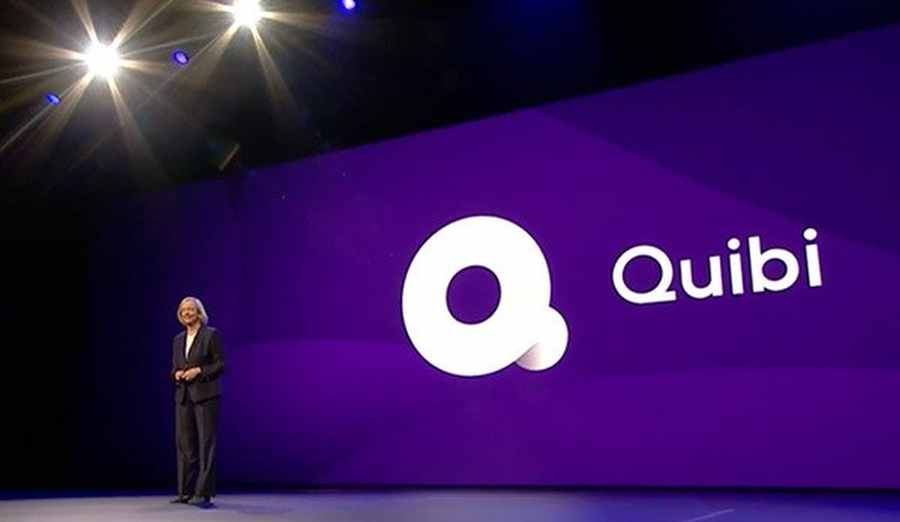

Quibi did not fail because Americans hate short videos. They watch short videos all day, in grocery lines, on lunch breaks, in parked cars, and on couches with the TV already on. The Streaming Business Failure happened because Quibi asked people to pay for a new viewing habit before it proved that habit belonged in their lives, during a season when routines were already breaking. Backed by Hollywood names and huge investor money, the app launched in April 2020 with short phone-first episodes, a paid plan, and a promise that premium entertainment could own the spare minutes between bigger moments. For business owners studying media, startups, or brand visibility strategy, the harder lesson is not “avoid bold ideas.” It is this: money can buy launch noise, but it cannot buy a daily reason to return. Quibi raised about $1.75 billion, then announced its shutdown only six months after launch, even while the wider streaming market was booming during the pandemic.
The Big Bet That Mistook Funding for Proof
Quibi entered the market with the glow of a sure thing. Jeffrey Katzenberg had deep Hollywood history. Meg Whitman brought corporate weight. Major studios, advertisers, and investors had already shown up before most Americans had even touched the app. That kind of backing can make a team feel close to the customer, even when the customer has not yet spoken. The Quibi business model treated capital as a head start. In practice, it became a blindfold. The company had the kind of launch most founders dream about, yet the first customer question stayed stubbornly plain: why should this app get a place next to the ones I already open without thinking?
Why Star Power Hid a Demand Problem
There is a quiet trap inside famous names. They make meetings easier. They make press louder. They make risk feel managed. Quibi had stars, expensive shows, and a sharp pitch: quick bites of premium video made for the phone. On paper, that sounded like a clean answer to modern attention spans.
The problem was that attention span was not the same as willingness to subscribe. A tired nurse in Ohio may watch a TikTok clip after a shift, but that does not mean she wants another paid app. A college student in Austin may love celebrity content, but if that content cannot travel through group chats, memes, and feeds, it has to work much harder. Quibi built polished programming for mobile screens, but polish was not the missing piece in mobile video.
The non-obvious lesson is that a great pitch can be too tidy. Investors may like a product category with clean edges: short episodes, mobile screens, premium ads. Users often live in messier patterns. They bounce between free clips, YouTube searches, text messages, live sports alerts, and half-watched shows. A product that does not fit that mess has to fight the day itself.
That fight is not won through reputation alone. A mother in Tampa may respect the people behind a show and still ignore it because dinner, homework, and one familiar app are already enough. The gap between respect and routine is where many new ventures lose money.
Why a Paid Phone App Had to Beat Free Habits
Quibi charged after a free trial, with an ad-supported plan and an ad-free plan. That put it in a hard place from the start. It was not competing only with Netflix, Hulu, or Disney+. It was competing with every free habit already living on the phone. YouTube had search. TikTok had endless discovery. Instagram had friends. Those platforms did not ask Americans to schedule a new kind of attention.
The short-form streaming service also faced a trust gap. Viewers knew what they got from a Netflix subscription. They knew what YouTube was for. Quibi had to teach people a new reason to pay, then prove the reason fast, then make them come back after the trial ended. That is a lot to ask from someone who downloaded the app because a headline said it was new.
A second problem sat underneath the price. People do not compare paid products only by cost. They compare them by mental effort. A free app that opens into motion feels easy. A paid app that asks for selection, loyalty, and a new context feels heavier, even when the monthly price looks small.
Small retailers and local service companies can learn from this without spending a dollar on video. A new offer should not begin with “How do we make people notice us?” It should begin with “What habit are we entering?” A barber in Phoenix adding online booking is not selling software. He is removing the Saturday morning phone call. That is why it works.
Streaming Business Failure Started With the Wrong Viewing Moment
The timing was brutal, but timing alone does not explain everything. Quibi launched on April 6, 2020, when Americans were staying home, commutes had vanished, and the phone was no longer the escape from the office. The product had been shaped around “on-the-go” viewing, yet the country’s daily rhythm changed before the app could build muscle. Quibi’s leaders blamed part of the pain on the pandemic, and that was fair. Still, the deeper issue was that the app depended on one narrow viewing moment. When that moment disappeared, the product had too few other doors.
The Commute Vanished Before the Product Could Breathe
A mobile video platform built for subway rides and coffee lines needs those spaces to exist. In New York, Chicago, Los Angeles, and San Francisco, the spring of 2020 was not a normal launch season. People were at home with bigger screens nearby. They were dealing with school closures, job stress, health fears, and strange new routines. That is not the same emotional setting as a train ride.
Quibi was not wrong that Americans had short pockets of time. It was wrong to assume those pockets needed premium episodes from a new app. At home, the “quick break” could become an episode of an old sitcom, a few minutes of cable news, a phone call, a recipe video, or a doom-scroll. Quibi had built for spare minutes, but spare minutes do not all carry the same mood.
Here is the counterintuitive part: a narrower product can win when the setting is stable. A lunch-only restaurant near a courthouse can thrive because the lunch rush repeats. But if that courthouse closes, the narrowness becomes a weakness. Quibi’s focus looked sharp before launch. After lockdowns began, it looked brittle.
Why Turnstyle Was Clever but Not Enough
One of Quibi’s signature ideas was the ability to watch shows in vertical or horizontal mode. The company called that feature Turnstyle, and Axios noted that Quibi’s videos were made for both orientations, with most running around 7 to 10 minutes. That was a real product idea, not empty theater. It solved a small irritation for phone viewing.
Yet clever features rarely save a product that has not earned a place in the day. A viewer does not open an app because a video rotates well. She opens it because she expects a payoff. A laugh. A plot. A useful answer. A shared reference. Quibi’s technology made the viewing smoother, but it did not make the habit urgent.
For a small business, that difference matters. A restaurant app with a smooth menu is nice. A restaurant app that remembers the lunch order of nearby office workers solves a sharper problem. Features are not value by themselves. They only matter when they reduce friction in a moment people already care about. That rule is harsher for any mobile video platform because the phone is already crowded with easier choices.
The Product Had No Social Path Into American Culture
Quibi wanted premium control. That instinct made sense from an old media angle. Hollywood has long protected releases, windows, rights, and formats. But phone culture works differently. People do not only watch; they send, remix, joke, react, and argue. A clip becomes culture when it leaves home. Quibi kept too much of its product inside the app, and that made discovery harder than it needed to be. A mobile video platform has to respect the phone as a social device first and a screen second.
Why a Closed App Made Discovery Harder
A paid mobile app needs social proof fast. People should hear about a show from a friend, see a clip in a feed, and feel that they are missing something. That path was harder for Quibi because its content did not spread through the same easy lanes as free social video. The result was strange: a mobile-first product that did not move through mobile culture with enough speed.
Think about how a joke travels in the United States. Someone sees it on TikTok, sends it to a cousin in Dallas, posts it in a group chat, and by dinner someone is quoting it. That path is not neat, but it is powerful. A locked-down app slows that chain. It asks marketing to do the job that users might have done for free.
This is where digital brand growth lessons become plain. Control feels safe, but too much control can choke reach. If a product depends on conversation, the company has to design for sharing from day one. The safer wall can become the reason nobody hears the party inside.
Why Premium Content Could Not Create Daily Habit
Quibi’s shows had well-known talent, and some were later valuable enough for Roku to acquire distribution rights to more than 75 shows and documentaries for The Roku Channel. That tells us the content was not worthless. In a different home, with a free ad-supported model and a large TV platform, the same library had more room to breathe.
That is the uncomfortable lesson. Sometimes the asset is better than the business around it. A show may work. A format may work. A paid app may not. Roku did not need to convince users to add a new paid mobile habit in the same way Quibi did. It could place the shows into an existing channel where viewers were already browsing.
That shift matters for any short-form streaming service trying to prove itself. The same ten-minute episode can feel like a burden in one product and a bonus in another. Distribution changes the meaning of content.
The Quibi business model confused production value with habit value. A fancy show can still feel like homework if the product asks too much. A cheap clip can feel irresistible if it arrives in the right feed at the right moment. For founders, that hurts to admit because production is visible. Habit is harder to photograph.
The Money Lesson: Spend After the Market Pulls You In
The half-billion-dollar framing makes the story feel neat, but the full capital lesson is bigger. Quibi raised about $1.75 billion, sold out $150 million in first-year ads before launch, and still could not turn attention into a durable audience. The point is not that large budgets are bad. The point is that large budgets punish weak feedback loops. When spending outruns learning, every mistake gets expensive faster. A bigger check can speed up the wrong answer before the team has heard enough truth from users.
Why the Quibi Business Model Burned Trust Before It Earned It
A subscription product takes trust before it takes money. The user has to believe the app will keep being worth the charge. Quibi had a free trial, but a trial does not remove the trust problem. It only delays the moment of judgment. When that moment came, too many people did not feel enough pull to stay.
That made the ad side harder too. Quibi’s model needed subscribers and viewing time to support ad demand. Axios described that engine as dependent on enough subscribers and “eyeballs” to sell attractive ads, similar in broad shape to Hulu. The catch is that Hulu had years of TV behavior behind it. Quibi had to build a behavior while also feeding an ad machine.
Small companies should not laugh at this from a safe distance. The same pattern happens when a gym buys new machines before it fixes member retention, or when an online store spends on influencer posts before it knows which item gets repeat buyers. Spend can hide weak signals for a while. Then the bill speaks.
What Small Companies Can Steal From a Giant Mistake
The useful lesson is not “start tiny forever.” It is “make the market pull the next dollar out of your hand.” Test the habit first. Watch whether people return without being chased. See what they share without being paid. Study where they hesitate, not where they compliment you. Compliments are cheap. Repeat behavior is evidence.
A local clothing boutique in Atlanta launching live shopping should not begin with studio lights and a full production crew. It can begin with a weekly phone-shot session, five items, and a simple question: do viewers ask for sizes in the comments? A SaaS founder in Denver should not build ten dashboards because prospects praised the demo. She should find the one report people open three times a week.
Quibi’s final gift to smaller operators is permission to be less dazzled by scale. You do not need celebrity founders to make the same mistake. You can do it with a new menu, a paid newsletter, a fitness challenge, or a second location. The danger is the same: building a polished answer to a question customers never asked with enough force.
The safer move is slower, but not timid. Put the rough version in front of real customers. Let their repeat actions tell you what to improve. Then spend behind the behavior that survives contact with a normal Tuesday.
Conclusion
Quibi is easy to mock because the collapse was loud, fast, and expensive. That makes the story tempting to flatten into a joke about Hollywood ego or bad timing. The better reading is sharper and more useful. The Streaming Business Failure showed how a company can be right about a trend and wrong about the product doorway into that trend. Americans did want short video. They did want mobile entertainment. They did not want that exact paid habit, in that exact format, at that exact moment. Business owners should sit with that difference. A market trend is not a customer promise. A famous founder is not demand. A polished product is not a routine. Before you spend big, earn a small behavior that repeats when nobody is watching. Then build around that proof with patience, not panic. For more business breakdowns, connect this lesson with startup revenue model analysis and study the Reuters report on Roku acquiring Quibi’s content library. Build what people return to, not what looks impressive on launch day.
Frequently Asked Questions
How much money did Quibi raise before it shut down?
Quibi raised about $1.75 billion before its shutdown announcement in October 2020. That money came from major media, tech, and financial backers. The larger warning is that funding gave the company reach, but it did not prove paid user demand.
Why did Quibi fail so quickly after launch?
It asked users to adopt a paid mobile viewing habit at the wrong time and against stronger free habits. The pandemic hurt its on-the-go pitch, but the app also had weak social sharing, hard competition, and no must-return daily behavior.
Was Quibi a bad idea or a badly timed idea?
It was both. Short mobile video was a strong category, but Quibi’s paid, premium, closed-app version did not match how many Americans already watched and shared clips. Timing made that mismatch harsher, not fully responsible.
What was the Quibi business model?
It mixed subscription revenue with advertising. Users could pay for an ad-supported plan or a higher-priced ad-free plan, while the company also sold ad inventory. That model needed steady subscribers and repeat viewing to work.
Did Roku buy Quibi after the shutdown?
Roku acquired global distribution rights to Quibi’s content library in January 2021. More than 75 shows and documentaries were set to appear on The Roku Channel, a free ad-supported platform. That gave the content a better distribution home.
What can small businesses learn from Quibi?
Test behavior before spending big. A smaller company should prove that customers return, share, buy again, or ask for more before investing heavily in polish. Early proof matters more than launch noise.
Did the pandemic cause Quibi to fail?
The pandemic damaged Quibi’s commute-based use case, but it was not the only cause. TikTok and YouTube still grew inside phone culture because they matched free discovery and sharing habits better than Quibi did.
Is short-form video still a good business idea?
Yes, but the format works best when distribution, sharing, and habit are built into the product. Short videos alone do not create a business. The real advantage comes from repeat use and a clear reason to return.