
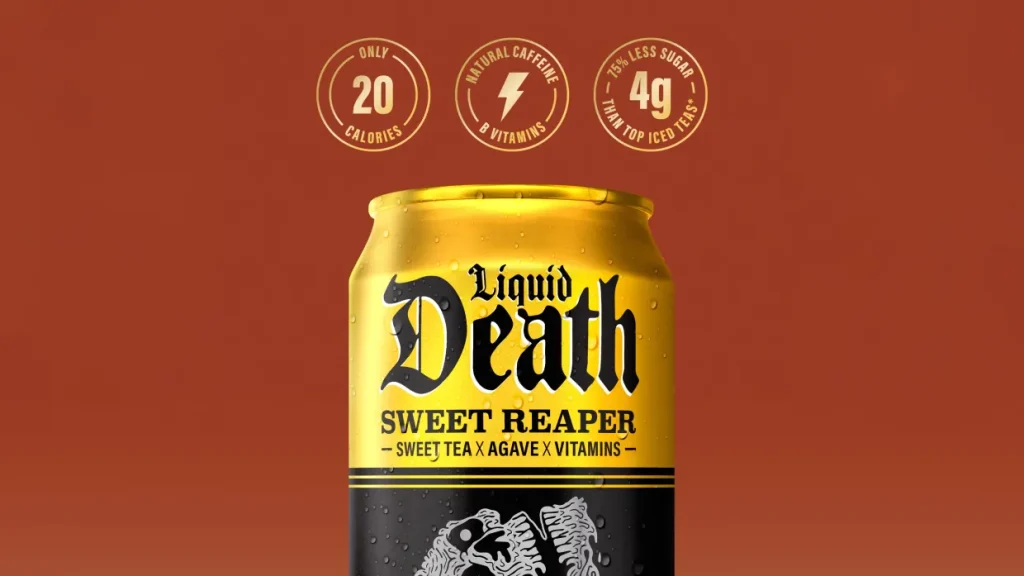

Most water brands whisper, and that is why shoppers ignore them. Liquid Death Water proved that a plain product can feel loud, funny, social, and worth paying attention to when the brand behaves like entertainment instead of a label on a bottle. The company did not win because water became new. It won because the buying moment became less boring. In the U.S., where convenience stores, concerts, gyms, offices, and grocery aisles are packed with nearly identical hydration choices, Liquid Death made the can feel like a prop in the customer’s identity. By 2023, the brand had passed $250 million in sales, and in 2024 its valuation reached $1.4 billion after another funding round. That kind of rise does not happen from a logo alone. It happens when product, packaging, tone, retail fit, and cultural timing all pull in the same direction.
Why Liquid Death Water Turned Shelf Space Into Theater
A grocery shelf is not a calm place. It is a fight for a tired shopper’s eyes. Most water brands enter that fight with mountains, purity claims, blue labels, and soft language. The result is safe, but safe often blends into the wall. Liquid Death walked into the same space wearing the visual language of beer, punk posters, skate graphics, and heavy metal merch.
That choice created tension on purpose. You saw a tall can with a skull, then learned it was water. The joke landed before the first sip. That is the heart of canned water branding: the package has to earn attention before taste can earn a second purchase.
How the can made water feel less invisible
The tallboy can did more than change the container. It changed the setting where the drink made sense. A plastic bottle says gym bag, airport kiosk, or office fridge. A tall can says concert floor, barbecue, late-night gas station run, or tailgate cooler. Same need. Different mood.
That shift matters in the U.S. market because many people do not buy drinks only for thirst. They buy them for the moment around thirst. A can in your hand at a music festival carries a different signal than a clear plastic bottle. It lets someone skip alcohol without looking like they stepped out of the scene.
The non-obvious lesson is that packaging can create a social permission slip. Liquid Death did not need to convince people that water was healthy. Everyone knew that. The brand had to make water feel less awkward in spaces where beer, soda, and energy drinks owned the visual language.
Why looking wrong made the product easier to remember
Most new brands try to look right for the category. That sounds smart until every competitor is doing it. Looking wrong can be a sharper move when the product itself is simple and familiar. Liquid Death looked wrong for water, so people talked about it.
That mismatch gave the brand a built-in story. A friend could hold up the can and say, “This is water,” and the other person would look twice. You cannot buy that kind of small reaction with a plain bottle. You have to design for it.
For founders, this is where brand positioning strategy stops being a workshop phrase and becomes a shelf decision. The skull, the tall can, the name, and the slogan all told the same joke. Nothing asked the shopper to study the brand. The shelf did the talking.
How Humor Turned a Commodity Into a Character
After the package got attention, the voice had to keep it. This is where Liquid Death separated itself from brands that confuse edgy design with actual personality. The company did not treat humor as a campaign layer. It made humor the operating system.
Its official story says the brand wanted to bring the funniest marketing energy, often saved for beer, fast food, candy, and junk food, into healthier drinks. It also says the brand donates part of proceeds to fight plastic pollution. That mix is strange, but it works because the serious point is wrapped in absurd delivery.
Why jokes beat product claims in a sleepy category
Water has a claim problem. “Clean,” “fresh,” “pure,” and “natural” all sound fine, yet none gives the customer much to repeat. Humor does. People share jokes faster than they share hydration claims.
Liquid Death’s “murder your thirst” line gave the brand a sentence that could travel. A customer could say it without sounding like a spokesperson. A retail buyer could remember it after a meeting. A social media user could laugh at it even if they never planned to buy a case.
This is a smart beverage marketing strategy because it accepts a hard truth: the product benefit is not rare. The emotional wrapper has to carry more weight. The brand is not asking you to believe water changed. It is asking you to enjoy the act of choosing it.
How the brand made criticism useful
Many companies fear negative comments because they treat brand safety as silence. Liquid Death found a stranger route. It turned hate, confusion, and mockery into fuel. When people called the brand silly, the insult still carried the name.
That is not an excuse for careless marketing. It is a sign of control. The brand knew which kind of backlash helped it and which kind would damage trust. Being called weird can help a brand built on weird. Being called fake, unsafe, or low quality would be another story.
The counterintuitive lesson is that a polarizing brand can be easier to manage than a bland one. Bland brands get ignored, then spend more to remind people they exist. A sharp character creates its own weather. Some people complain. Others come closer.
Why Distribution Worked Better Because the Brand Felt Social
Brand heat means little if shoppers cannot find the product. Liquid Death’s rise was not only a content story. It was also a channel story. The brand fit places where the can made instant sense: music venues, convenience stores, festivals, grocery chains, and online orders.
That retail fit helped the brand avoid a common trap. Some internet-famous products look fun on TikTok but feel out of place in a store. Liquid Death had the opposite edge. The can was made for cold cases, checkout coolers, and event fridges. The more normal the buying location, the funnier the contrast became.
How event culture gave the can a natural role
At a concert, a can of water solves more than thirst. It gives sober guests, designated drivers, performers, and staff something that feels part of the room. That is a small detail, but small details build habits.
Think about a summer show in Austin, a skate event in California, or a late-night convenience stop in Chicago. A customer sees the can near energy drinks and beer-shaped signals, not tucked away like medicine. That placement makes the product feel social before anyone explains it.
This is where disruptive brand positioning becomes practical. It is not disruption for noise alone. It gives retailers a new reason to stock water in settings where bottled water once felt dull but necessary.
Why the brand could expand without losing the joke
A narrow brand can burn out when it has nowhere to go. Liquid Death avoided that risk by building around an attitude rather than one liquid. Its official site now presents mountain water, iced tea, soda-flavored sparkling water, and sparkling energy under the same house style.
That matters because the brand can enter nearby drink occasions without starting from zero. Sparkling water covers soda replacement. Tea covers the Arizona-style tall can habit with less sugar cues. Energy drinks let the brand poke fun at extreme caffeine culture while still sitting in a fast-moving cooler set. The Wall Street Journal reported that its Sparkling Energy line was designed around 100 milligrams of caffeine, no sugar, and no artificial sweeteners.
The hidden insight is that Liquid Death did not make water cool so it could sell water forever. It made the brand cool so water could become the first doorway. That is a different kind of beverage marketing strategy, and it is harder to copy than a skull.
What Other Boring Categories Can Learn Without Copying the Skull
The worst lesson a founder can take from Liquid Death is “make the logo louder.” A louder logo on a weak idea is still weak. The better lesson is to find the category’s dead space, then build a brand that makes that space feel alive.
For bottled water, the dead space was sameness. For another category, it may be shame, confusion, low trust, dull packaging, or a buying moment nobody enjoys. Insurance, accounting software, air filters, protein snacks, socks, storage bins, and cleaning supplies all have their own version of the boring shelf.
Why copying the style misses the real move
A skull works for Liquid Death because it sits against water. Put the same skull on motorcycle gear, and the joke gets weaker because the category already expects that energy. Contrast is the engine.
This is where many copycat brands fail. They borrow the costume but not the strategic tension. They act loud in a category where loud is normal, then wonder why nobody cares. Canned water branding worked because the product was plain, the package looked wild, and the buyer understood the gap in one second.
A better move is to ask a harder question: what emotion does my category refuse to touch? If every tax app sounds calm, maybe the opening is relief with bite. If every mattress brand sounds dreamy, maybe the opening is blunt honesty about back pain, small bedrooms, and bad returns.
How to build a sharp brand without becoming a gimmick
A gimmick is a joke with no second layer. A brand is a promise with a memory. Liquid Death had the joke, but it also had retail logic, a product people already understood, and a mission tied to less plastic waste. Its own sustainability page frames cans as an alternative to unnecessary plastic bottles, while still admitting one drink company cannot fix the whole problem. For broader context, the U.S. EPA recycling basics page is a useful source for how recycling fits into waste reduction.
That last part matters. The best disruptive brand positioning gives people something to enjoy and something to defend. If the brand is only noise, it fades when the joke ages. If it is only virtue, it risks sounding like homework. The blend is where the power sits.
For more support, connect this lesson to consumer behavior and brand loyalty. Customers do not stay with a brand because it shouted once. They stay because the brand keeps giving them a clear role to play. Liquid Death made the buyer feel like an insider, not a hydration patient.
Conclusion
The bigger lesson is not that every dull product needs a darker name or a louder can. That would be lazy copying. The real lesson is that boring categories often stay boring because brands obey the category’s manners too closely. Liquid Death broke those manners with discipline. The product stayed easy to understand, while the brand gave people a reason to notice, share, and bring it into social moments. Liquid Death Water became a case study because it treated attention as part of the product experience, not decoration added after the fact. For U.S. founders, marketers, and small business owners, the takeaway is clear: find the emotion your category has been avoiding, then own it with consistency. Do not chase shock for its own sake. Build a character that can survive the second purchase. That is where a brand stops being a stunt and starts becoming a habit.
Frequently Asked Questions
How did Liquid Death become popular in the United States?
It grew by making water feel entertaining, social, and easy to talk about. The tallboy can, skull logo, dark humor, and anti-plastic message gave shoppers a reason to notice a product they already understood. Strong retail placement then turned attention into repeat buying.
Is Liquid Death a good example of disruptive brand positioning?
Yes, because it changed how people read the water category without changing the core product need. The brand used contrast, humor, and social identity to make plain hydration feel more expressive in stores, venues, and online culture.
What can small businesses learn from Liquid Death’s branding?
Small brands can learn to stop copying category habits blindly. The smarter move is to find what customers find dull, awkward, or ignored, then build a clear brand voice around that gap. The idea must fit the product, not mask it.
Why does Liquid Death use cans instead of plastic bottles?
The can supports both the brand look and its anti-plastic message. It also helps the drink feel closer to beer, energy drinks, and concert culture. That gives the product a social role that ordinary plastic bottled water often lacks.
Is Liquid Death’s marketing only successful because it is shocking?
No. Shock helped create the first look, but the brand lasted because the joke was tied to packaging, retail fit, product expansion, and a clear voice. Random shock fades fast when it has no buying logic behind it.
How does canned water branding differ from bottled water branding?
It changes the customer’s expectation before they drink. Bottled water often signals purity, fitness, or convenience. A can can signal social drinking, events, design taste, or rebellion, depending on how the brand shapes the moment.
Why do younger consumers connect with Liquid Death?
Younger buyers often reward brands that feel self-aware and less polished. Liquid Death speaks in jokes, memes, stunts, and bold visuals, which makes it feel native to social feeds. It also lets people choose water without looking boring.
Can another brand copy Liquid Death’s strategy and succeed?
A brand can learn from the strategy, but copying the skull-and-metal style is risky. The win came from contrast inside a dull category. Another company needs its own tension, voice, and customer moment, or the copy will feel hollow.